Built-in tutor
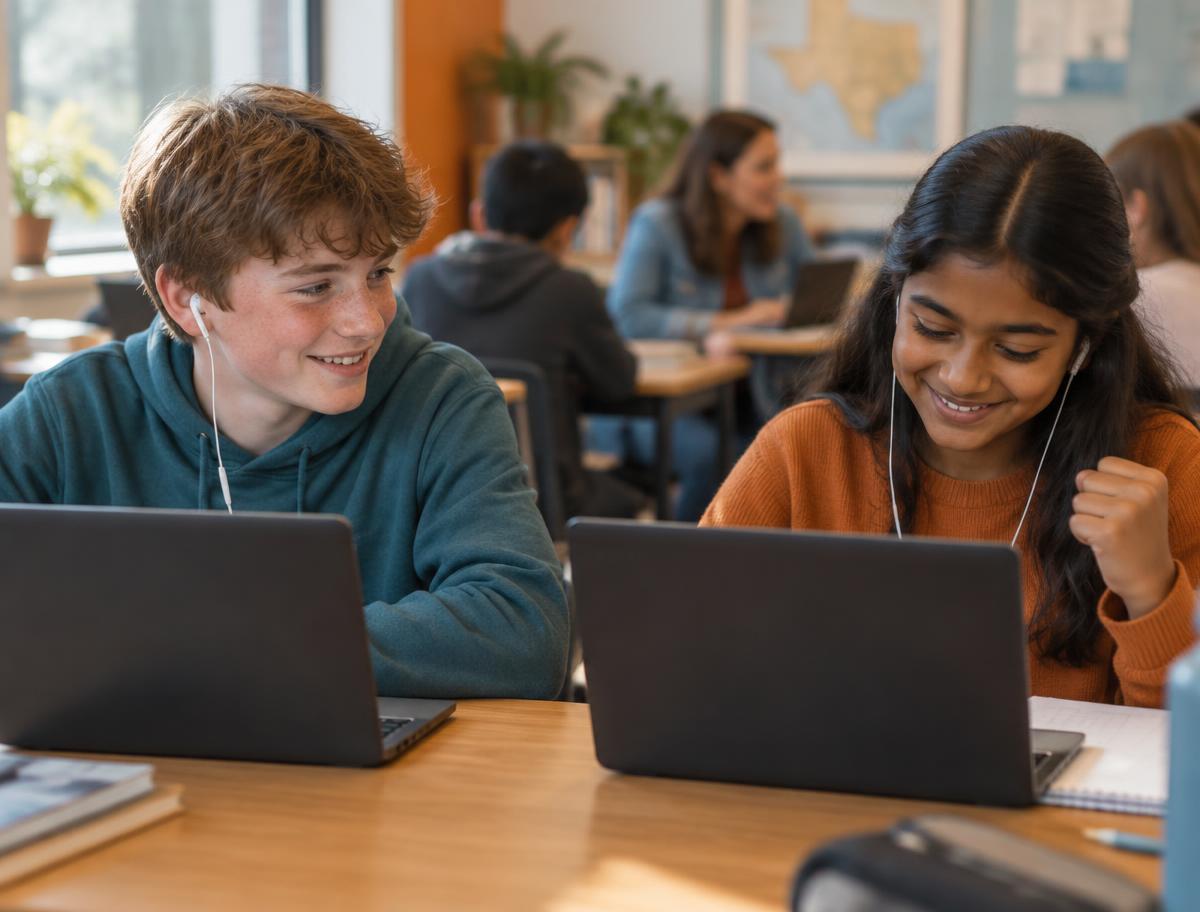
Forge gives step-by-step hints, read-aloud and voice, sized to the student's age. It is checked so it never reveals the answer, so students do the thinking. Saved tutor chats are grounded in each lesson and released item.
The Forge platform
Adaptive checks, a built-in tutor, video lessons and adaptive practice work as one learning loop, and every piece is built on what research says actually helps students learn.
How learning flows
BOY, MOY and EOY checks find each student's exact gaps.
A path built from the check, foundations first.
A short video lesson, then 3 quick questions.
Adaptive practice with a tutor that hints, never tells.
A fresh question on another day confirms it stuck.
Tiers, groups, 5E lessons and exit tickets close the gap.
Core pillars
The learning engine
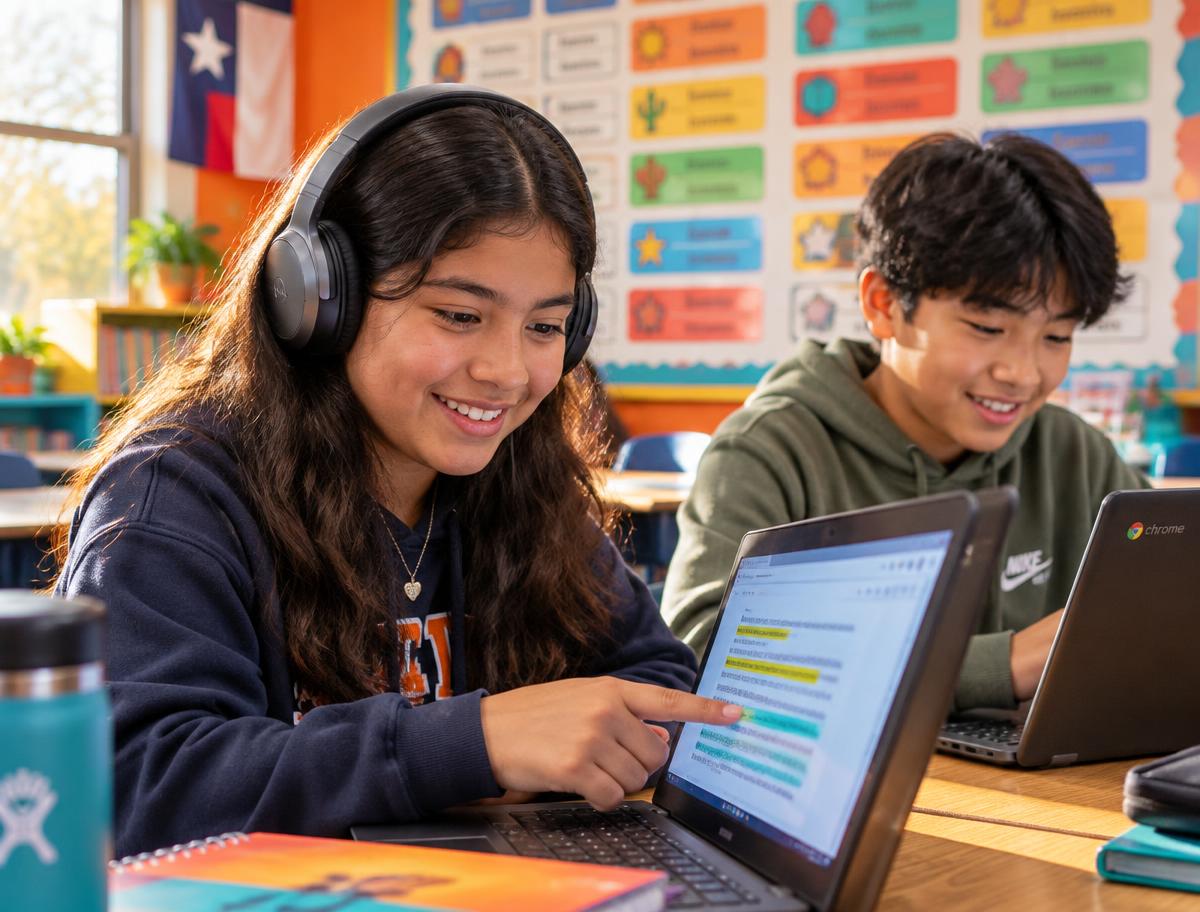
Forge gives step-by-step hints, read-aloud and voice, sized to the student's age. It is checked so it never reveals the answer, so students do the thinking. Saved tutor chats are grounded in each lesson and released item.

Every skill has credited, aligned videos. Watch & check pairs a short video with 3 released questions before practice, so students learn the idea first, then use it.

Through-year checks in TEA's online formats (drag and drop, equation entry, multipart) reroute each Quest Map. Checks guide the path; they never hand out mastery.

Practice adapts to every answer, re-teaches after misses, schedules reviews before skills fade, and unlocks the next skill only after a fresh question on a later day.
Mastery vs. test prep
Game mechanics
Students get the rush of a real game: live duels, combos, ranks, worlds and a season pass. Underneath, every hit is a released STAAR question on their own gap, and every unlock follows real mastery.
Ranked Arena: Calm, grown-up arena for Biology and Algebra I. Example round with sample questions; in the app every battle question is a released STAAR item on the student's own gap.
5 questions in grades 3–5, 6 in grades 6–8, 8 in high school. Done in minutes, so students want one more.
Challenge a classmate live, race their ghost run if they played earlier, or team up to take down a gap boss.
Streaks of correct answers charge bigger blasts, screen shake and arena sounds, with plain, sporty wording.
Private ranks from Spark to Legend and new worlds open only as students master skills.
Thirty tiers of skins, trails and emotes every six weeks, earned with XP from real work.
Each player battles their own weakest skills in math, reading, writing, Biology or Algebra I.
On the student's own gap skill
Correct answers fire blasts and build combos
Every correct answer counts as real practice
5 in a row and 80% accuracy
New worlds, ranks and gear
Sample screens. Ranks need mastered skills as well as XP, and worlds open only through mastery.
Only the student sees their rank. XP alone can't carry anyone up.
Skins, blast trails, emotes and name plates. Cosmetic only, kept forever, never for sale.
Master 2 skills in a world to open the next one. Each world has its own arena look.
Three new quests every day, a mix of battles and regular practice.
Each one follows from the research below.
Ranks and results are private to the players.
Only preset emotes like “Good game.”
Every reward is free and earned by learning.
Friends come from the same grade in their class, school or district.
A fast answer earns 1 bonus point; a correct answer earns 10.
Battlers throw energy, never weapons.
Battles count as normal practice; games never hand out mastery.
Dashboard views
A preview of what leaders and teachers see. Numbers shown are sample data.
8 weeks of practice on gap skills against an aim line. Evidence, not a diagnosis.
Why now
The research behind it
Each design choice maps to well-established learning research.
Mastery rule: 5 in a row + 80%
Mastery learning, where students must show a skill before moving on, raises achievement with an average effect of about half a standard deviation.
Kulik, Kulik & Bangert-Drowns (1990). Review of Educational Research, 60(2), 265–299.
Forge tutor + teacher small groups
Tutoring is one of the most effective school interventions; one-to-one and small-group tutoring produced large gains across 96 randomized studies.
Bloom (1984). Educational Researcher, 13(6), 4–16; Nickow, Oreopoulos & Quan (2020). NBER Working Paper 27476.
Practice questions instead of re-reading
Retrieving an answer from memory builds longer-lasting learning than studying the material again.
Roediger & Karpicke (2006). Psychological Science, 17(3), 249–255.
Reviews spaced over days + later transfer check
Spreading practice over time beats cramming for long-term retention.
Cepeda, Pashler, Vul, Wixted & Rohrer (2006). Psychological Bulletin, 132(3), 354–380.
Hints and feedback, never just the key
Feedback that tells students how to improve is among the strongest influences on learning; bare right/wrong is much weaker.
Hattie & Timperley (2007). Review of Educational Research, 77(1), 81–112.
BOY / MOY / EOY checks that reroute instruction
Formative assessment used to change teaching produces substantial learning gains, especially for lower-achieving students.
Black & Wiliam (1998). Assessment in Education, 5(1), 7–74.
Tier 1–3 groups and dosage
Response to Intervention matches intensity of support to need and monitors progress against a goal.
Fuchs & Fuchs (2006). Reading Research Quarterly, 41(1), 93–99.
5E teacher lessons
The Engage–Explore–Explain–Elaborate–Evaluate sequence supports conceptual understanding.
Bybee et al. (2006). The BSCS 5E Instructional Model. BSCS.
Short videos with words + pictures
People learn more from words and visuals together than from words alone, when extra load is kept low.
Mayer (2020). Multimedia Learning, 3rd ed. Cambridge University Press.
Battle Arena: points, levels, unlocks and quests
A meta-analysis of gamification in education found small-to-medium positive effects on learning, motivation and behavior.
Sailer & Homner (2020). Educational Psychology Review, 32, 77–112.
Private ranks instead of public leaderboards
In a semester-long classroom study, leaderboards and badges lowered intrinsic motivation and final exam scores, so Forge keeps ranks private and rewards personal progress.
Hanus & Fox (2015). Computers & Education, 80, 152–161.
Short battles that build competence
Games are most motivating when they satisfy feelings of competence, autonomy and connection with others, not just through rewards.
Ryan, Rigby & Przybylski (2006). Motivation and Emotion, 30(4), 344–360.
Streaks, choices and celebrations for real work
Feelings of competence and autonomy drive lasting motivation; rewards should recognize real effort, not replace it.
Ryan & Deci (2000). American Psychologist, 55(1), 68–78.
Research findings describe the general approaches Forge uses; they are not studies of Forge itself. Scores and tiers in the app are platform estimates, not official TEA results.